CATEGORY
Editorial
DESCRIPTION
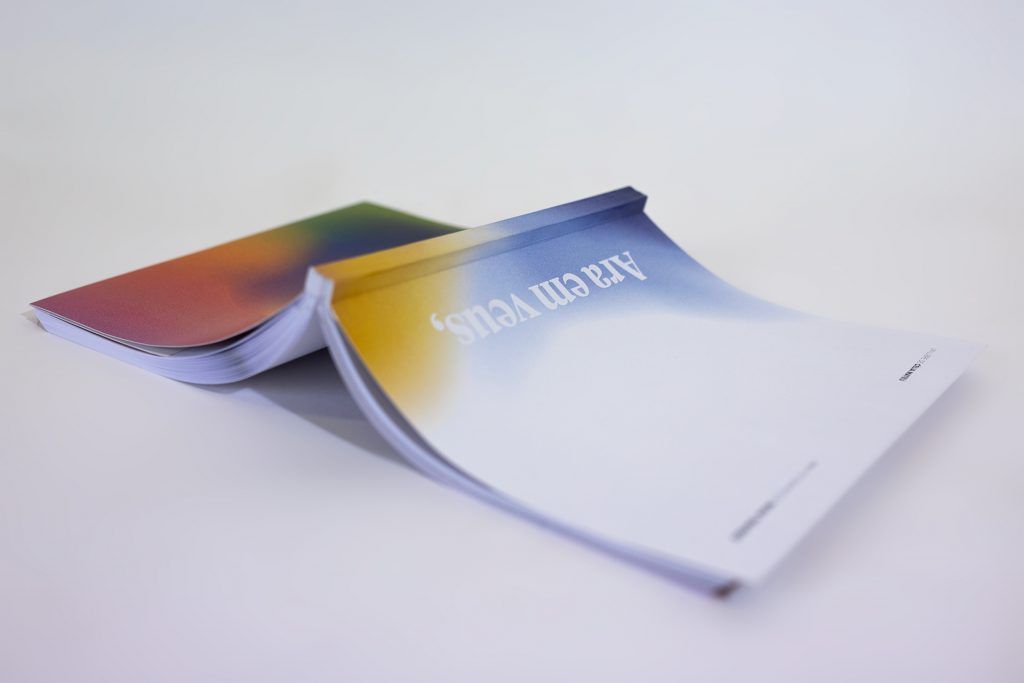
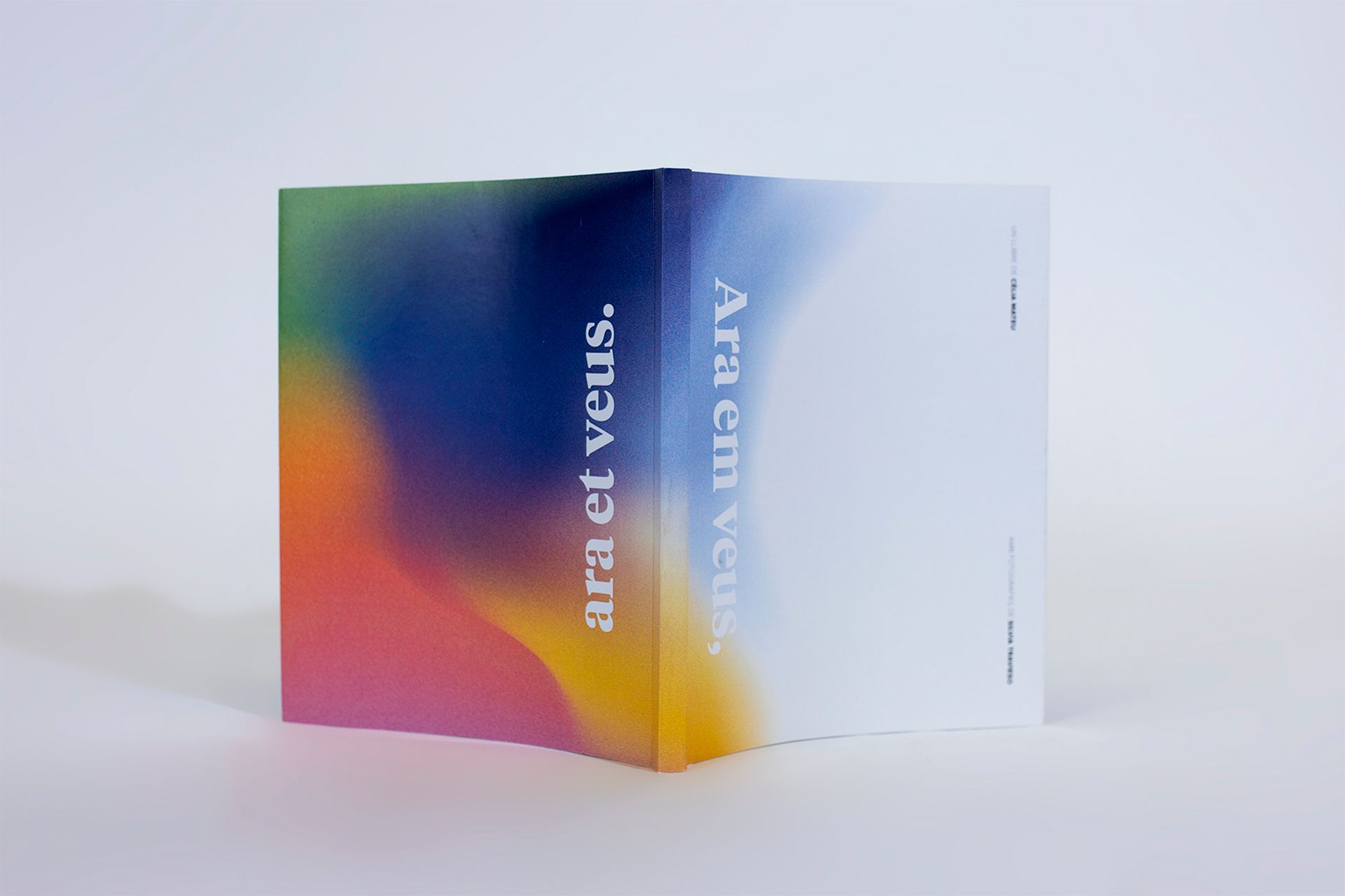
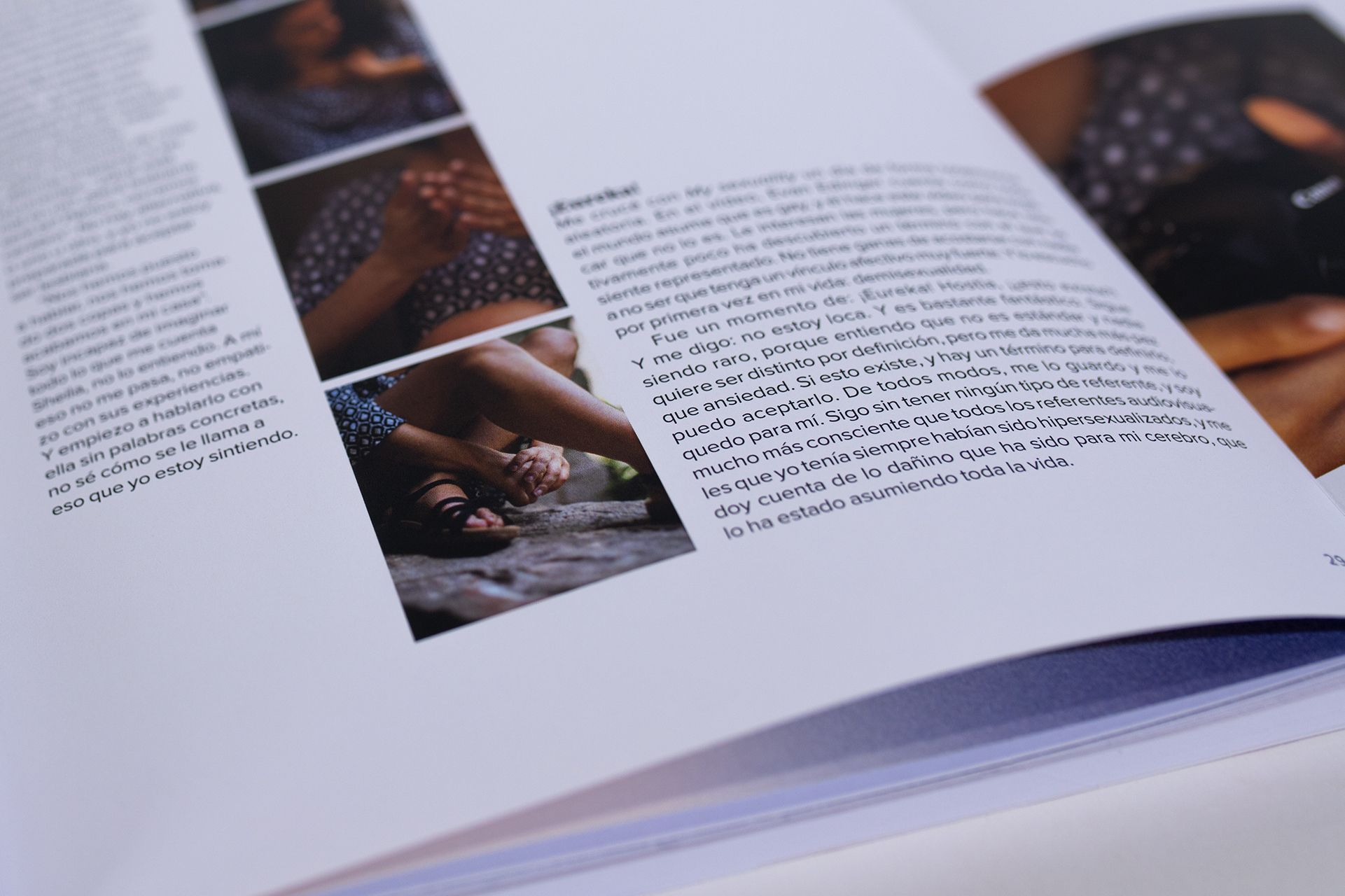
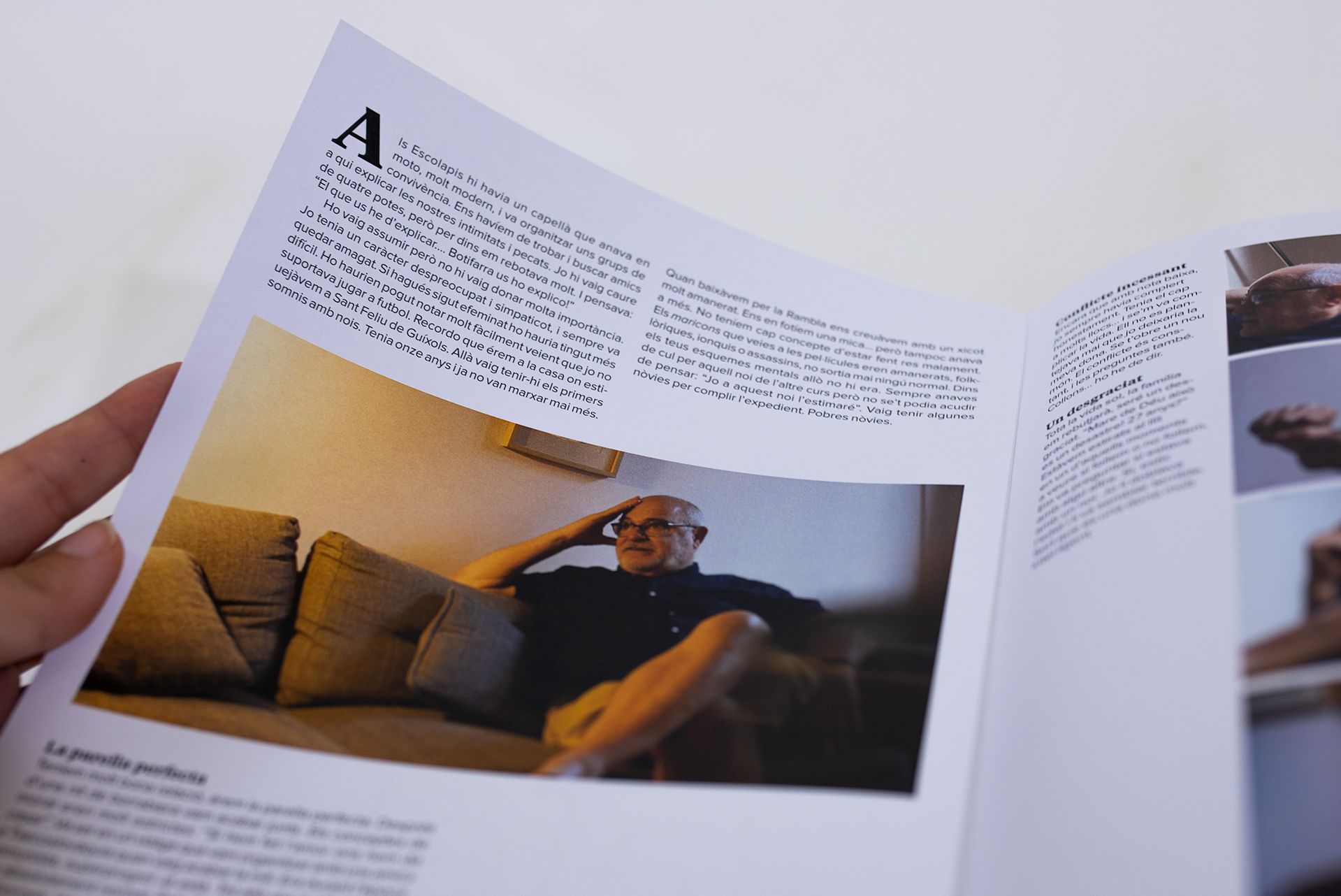
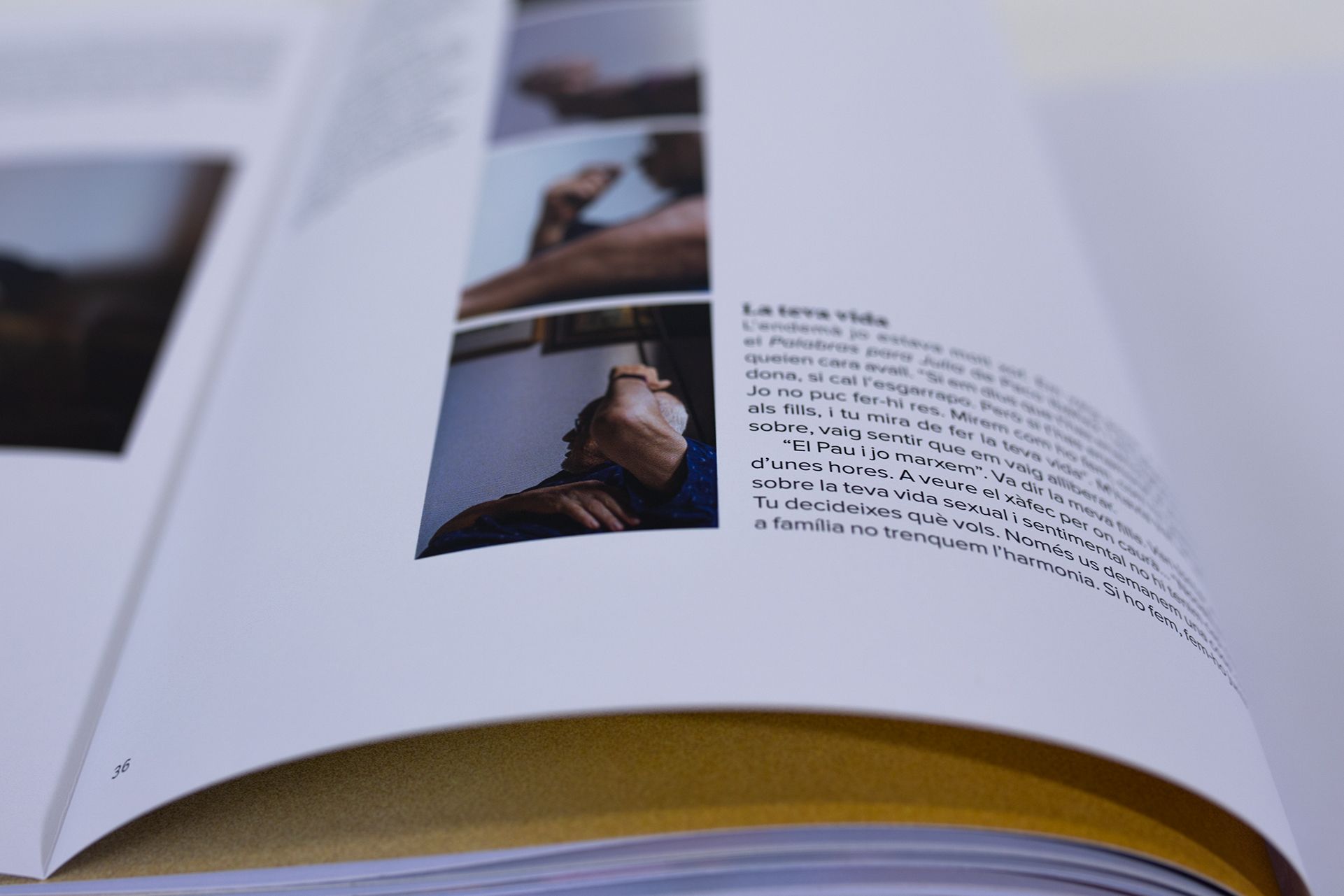
Ara em veus, ara et veus. (“Now you see me, now you see yourself.”) is a publication that gathers a series of testimonies from people who share their experiences related to sexual and gender diversity. The entire graphic identity of the book revolves around the concept of reflection, derived from the importance of role models and visibility.
It’s a long way to go
If we look back and analyze the situation of LGBTQ+ rights in our country a few decades ago, there is no doubt that we have witnessed a tremendous evolution in recent times. Spain was the third country in the world to approve same-sex marriage in 2005, and it seems that the “Ley Trans” (transgender law) officially known as the Law for Real and Effective Equality for Transgender People and for the Guarantee of LGBTQ+ Rights, will be passed. These are giant steps, indeed, but the truth is that there is still much work to be done. We are witnessing an increase in violence against individuals with sexual and gender diversity linked to a concerning rise of the far right. Just this past July, Samuel, a young gay man from La Coruña, was beaten to death, and we are experiencing a year with a constant stream of news about such attacks.
It is necessary to establish boundaries, legislate, and, above all, educate. Visibility is crucial to ensure that no one ever has to hide, suffer, or fear for their integrity or freedom. This project aims to contribute to the task of visibility and normalization of diverse identities. We need role models and stories where we can see ourselves reflected to build a society free from misogynistic and LGBTQ+-phobic violence.
The concept
As I met people who shared their stories with me, I discovered commonalities, particularly one specific and decisive aspect in all their experiences: role models or, rather, the lack of role models in an important part of their lives. Finding someone to recognize their emotions, feelings, and experiences was fundamental in realizing that what they were going through was neither strange nor isolated. How crucial it is to not feel alone: having a mirror to see oneself strengthens and affirms. That is why the concept that drives the entire graphic identity of this project is reflection.
Naming
The name came to me almost naturally. I needed a title that combined visibility with the concept of a mirror and included an evolutionary process, meaning that this reflection would have connected yet distinct components that had undergone a process. Thus, Ara em veus, ara et veus. (“Now you see me, now you see yourself.”) explains how, by finding and seeing someone who you feel represents you, you can recognize yourself in them. It is as if the book speaks to us: once you have read and seen me, you have found a mirror and have been able to see yourself. The two phrases are nearly identical with a minimal but significant change: the person, the subject, becomes you.
Graphic Identity
Based on this reflection, which has two distinct and evolving parts, as the starting point for the development of the graphic identity, it has been conceptualized and translated into design in two ways:
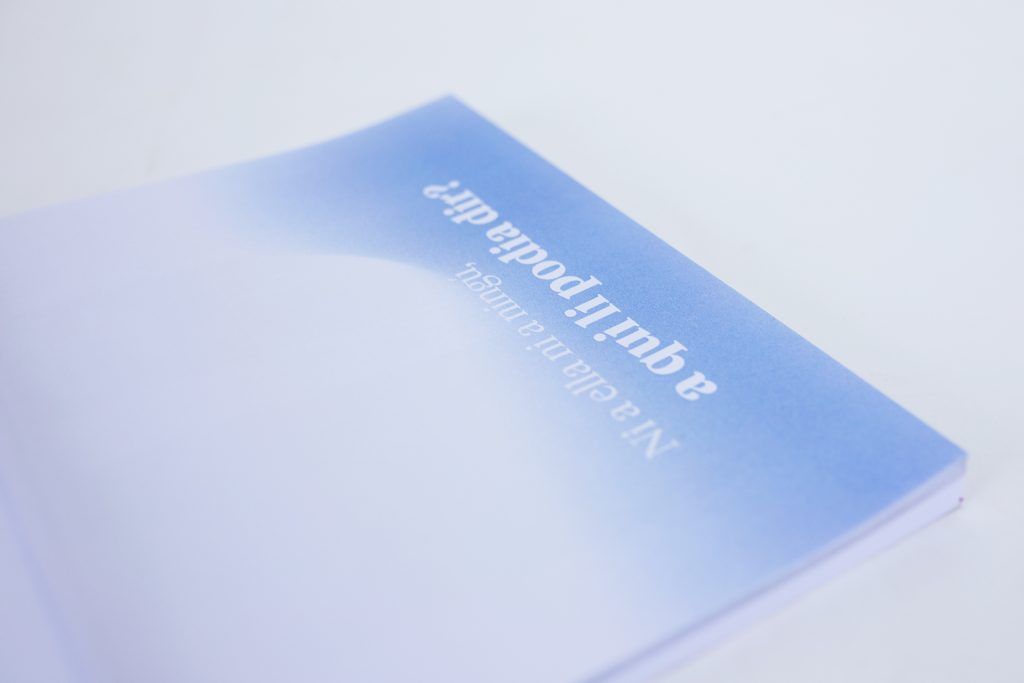
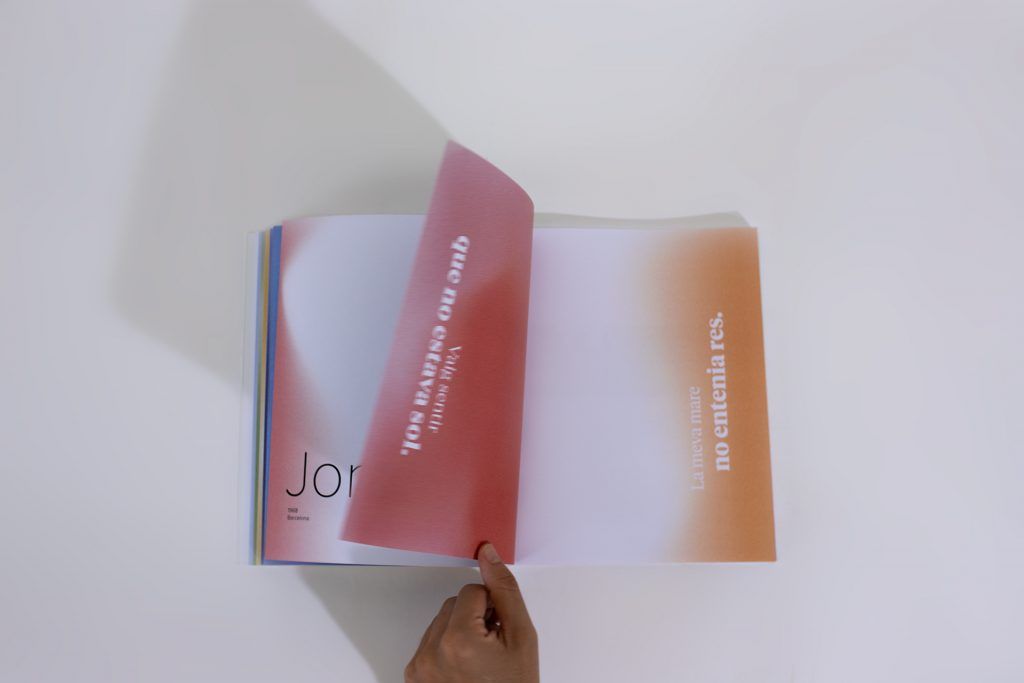
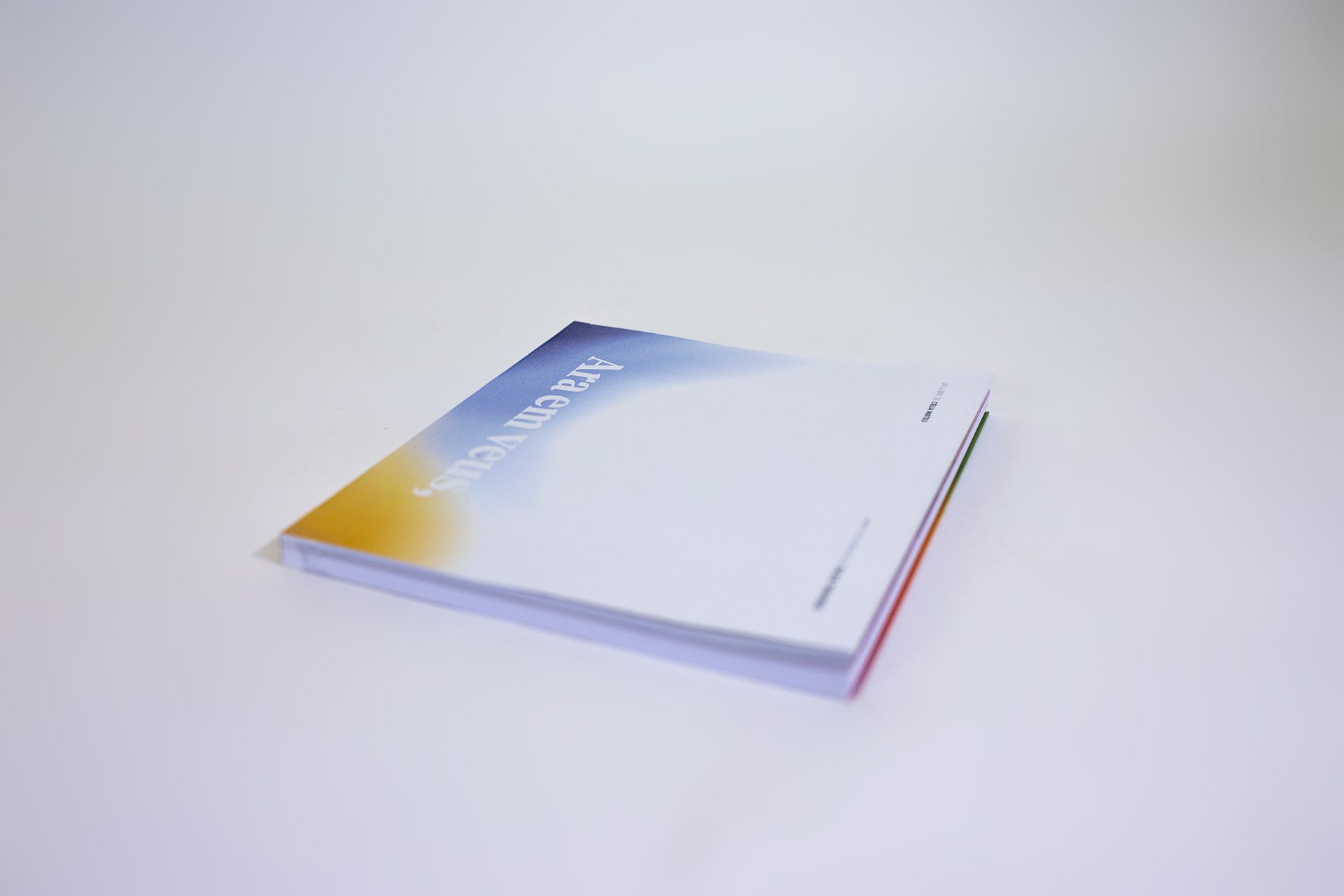
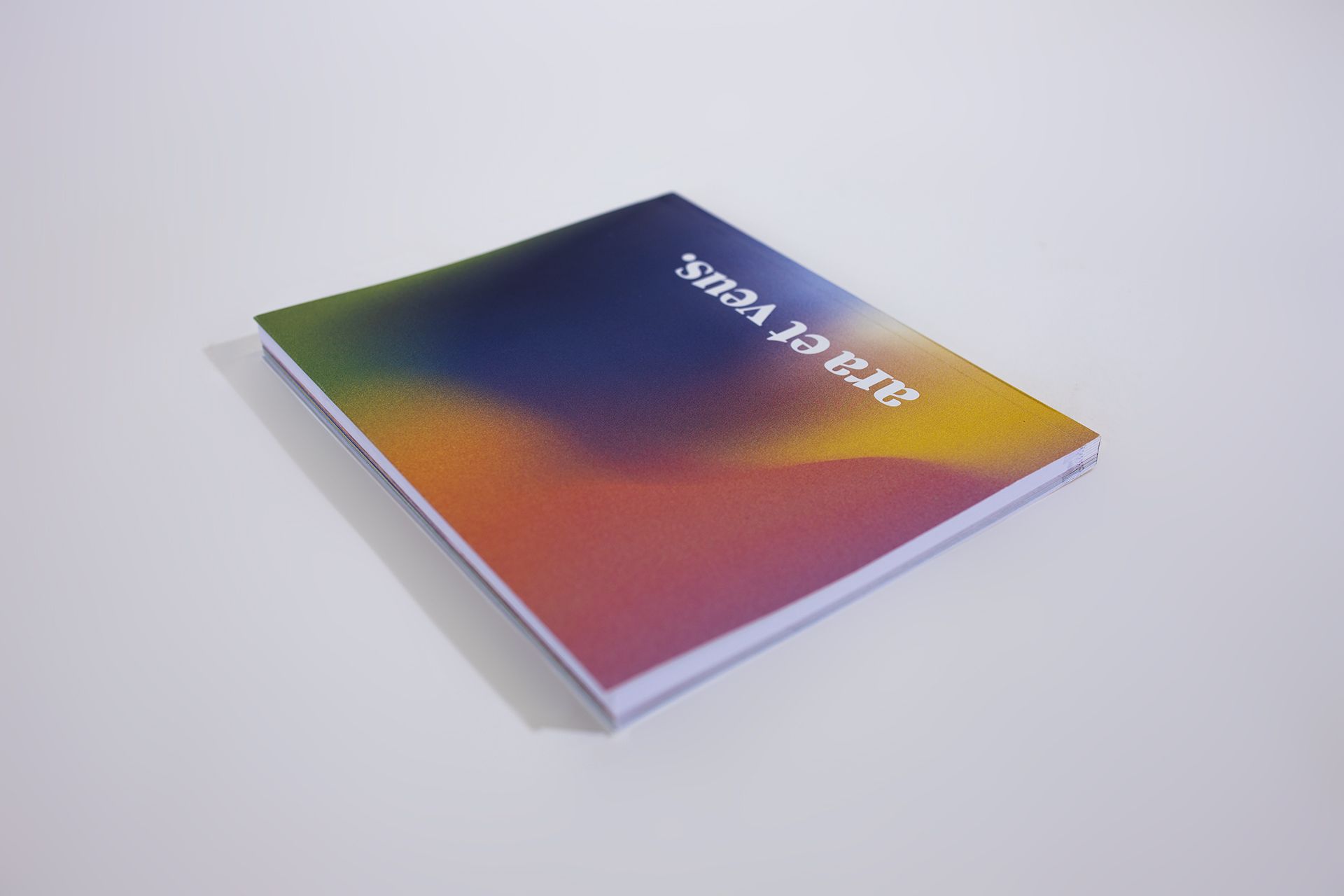
1. By using gradients on the front and back covers and at the opening and closing of the interviews. Each person is represented by a different color, symbolizing diversity within a heterogeneous and, above all, fluid collective. Initially, we see it timidly, where in the colorless parts, the letters almost disappear. As we reach the end, the gradient is complete, the personal process has evolved, and the voice is more confident. We can now read the text of the final quote more clearly against a contrasting background.
2. By arranging the title on the cover and the opening and closing quotes of the interviews. The vertical layout of the text on both the cover and the interior quotes prompts the reader to question the reason behind this arrangement. We associate the two quotes by graphically opposing them and representing the reflection through two sentences, where the last one serves as a resolution to the first.
The format
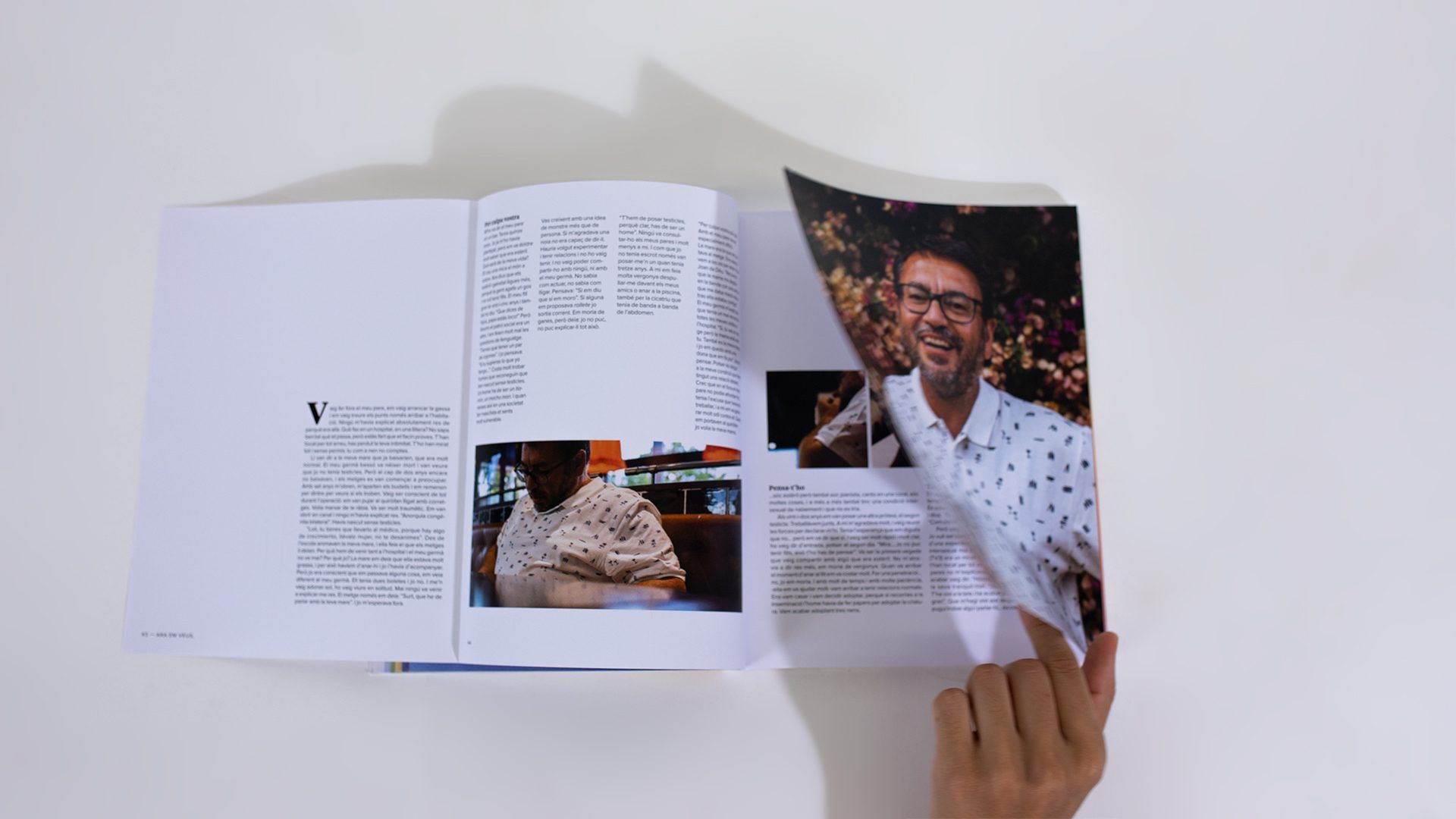
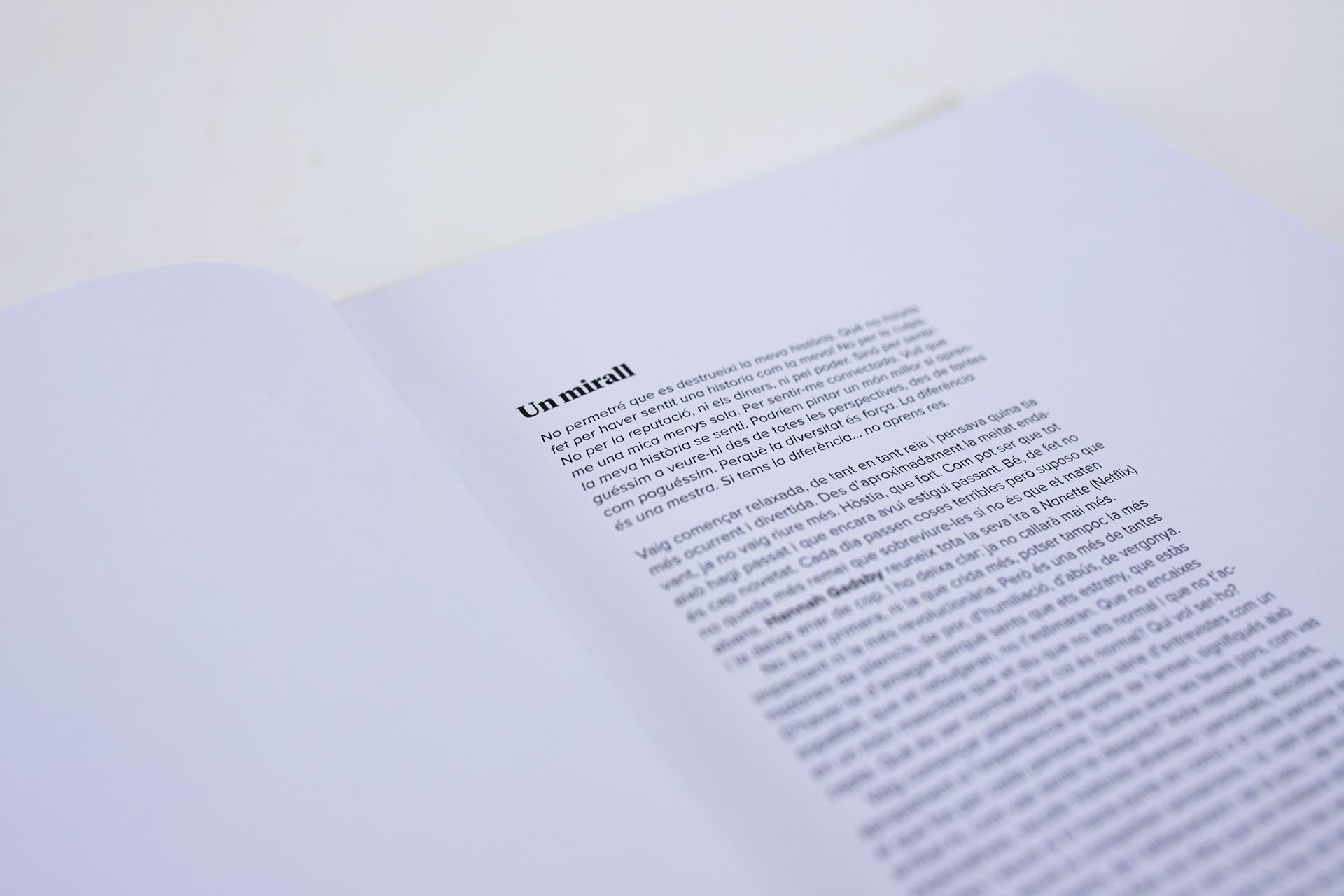
In addition to the reflection, I also needed to find a way to separate the interviews and create a formal narrative that takes the reader on a journey within these pages. Thus, each interview is a quadrifold folded in a window format, which requires us to open and unfold the pages to enter each story, delve into the lives of each of these individuals, and close them again once we have finished.
Una resposta